Seems like I'm always neglecting this thing, doesn't it? Forgive the reappearing/disappearing/reappearing act, guys; I've been unexpectedly without internet for much of the past month, forced to spend my spare time foraging for free wireless signals and cursing Mother Nature. You see, we've enjoyed some lovely summer storms around here lately, and one of them took out my dad's computer, my sister's computer, and the router that connects my computer to both of theirs. Fixing this has taken much longer than any of us anticipated, but thankfully I'll be back on campus by Sunday. I never thought I'd be in a position to miss Rowan's meager internet, but such is life.
In the meantime, I still need to go through all my film-related notes from Paris, but I'll tell you about a lovely surprise I had in a theater right here in Jersey. Have you seen The Time-Traveler's Wife? I went with my mom and sister last week, and to be honest I wasn't expecting all that much. I was pleasantly surprised in a couple of ways, not least of which was when a clip from this film popped up on-screen. I'll have you know I was quite proud of myself for being able to identify it immediately, although come to think of it after the number of times I've seen that movie, being able to pick it out by one scene is hardly an accomplishment.
Er, for those who haven't seen the movie yet and plan to, the above has absolutely nothing to do with any plot spoilers, but you might not want to click that link if you'd rather be surprised. Also, you might not want to read the rest of this post, which may in fact contain spoilers.
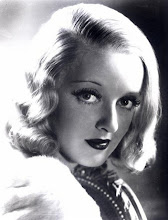
For everyone else: What did you think of the reference? I admit, after my initial "Y HELO THAR I KNOW YOU, MOVIE" buzz wore off, I had to kind of question why the filmmaker chose that particular scene of that particular movie. I mean, okay, I get it, Bette Davis is drunkenly rambling about time and the male protagonist here travels through time and neither of them feels they have enough time. But being so familiar with the film from which that one clip is taken, I can't really divorce it from its original context. On first viewing, I really didn't see a parallel between Henry and Miss Judith Traherne. She, in that clip, has just found out she's going to die; he travels back to, in a sense, relive various parts of his life over and over and over again. As much as I appreciate any opportunity to throw in a Bette Davis reference, I just wasn't sure it fit.
However, after talking to my mom about it a bit as we left the theater, it started to make a little more sense. Now, after typing up all the reasons why it originally confused me, I'm actually starting to see the connections between Henry and Judy. Henry's condition, we're told, is neurological and cannot be cured... just like Judy's. Both Henry and Judy are burdened with the knowledge of when they're going to die, and both movies involve a man keeping that knowledge from the woman he loves (and both deal somewhat with the fallout of that secrecy).
The more I think about it, the more I'm sold on the idea. Anyone want to add another $.02? Or if you have't seen The Time-Traveler's Wife, or Dark Victory, or both, then why don't you tell me about the last time you saw a classic film incorporated into a more modern work, and how you think that was handled?
Showing posts with label Dark Victory. Show all posts
Showing posts with label Dark Victory. Show all posts
Wednesday, August 26, 2009

Tuesday, March 10, 2009
Excuse me, kids, I've won a prize...
To celebrate TCM's 31 Days of Oscar, Raquelle recently held a contest to give away TCM U notebooks. My name was one of those pulled from her magic hat, and this afternoon I received this lovely prize in the mail!

Excuse the weird flash at the top; the cover's nice and shiny! Inside, it has a couple of pages with little descriptions of each "college" in the TCM University.

Then the rest is regular notebook paper with the TCM U logo at the top of each page. I'm thinking I might use this for a classic-film scrapbook of some sort; naturally there will be more pictures if and when this happens.
Many, many thanks to Raquelle!

Excuse the weird flash at the top; the cover's nice and shiny! Inside, it has a couple of pages with little descriptions of each "college" in the TCM University.

Then the rest is regular notebook paper with the TCM U logo at the top of each page. I'm thinking I might use this for a classic-film scrapbook of some sort; naturally there will be more pictures if and when this happens.
Many, many thanks to Raquelle!
Sunday, November 23, 2008
I think I'll have a large order of Prognosis Negative...
The first glimpse I got of Dark Victory was in the documentary Stardust: The Bette Davis Story, which I caught bits and pieces of when it aired on TCM on what would have been Bette Davis' 100th birthday last spring. They showed the clip that begins at about 6:10 in the above video, and I was so intrigued that I stayed up until 4 in the morning to watch the actual film. I managed to catch it a second time recently at a much more decent hour, and am happy to report that it wasn't just sleep deprivation that made me enjoy it so much the first time.
"Miss Judith Traherne of the Sleeping Trahernes" starts out as a spoiled society girl, only concerned with her parties and her horses. Bette Davis does a wonderful job adding layers to what seems at first like a very superficial character, especially when Judith is questioned about her health. She only reveals the extent of her headaches to Ann because she doesn't want her horse to be blamed for her mistake, a detail that suggests early on that there is more to Judy than the simple party girl she appears to be.
A basic premise of the movie -- the doctor and Ann conspiring to keep Judith's true prognosis from her -- may seem absolutely inconceivable to modern audiences. Although both Dr. Steele and Ann's motivations are pure, the good doctor would be breaking almost every medical law on the books if the story were set today. Even knowing that the film was set at a time when patients were routinely lied to "for their own good," it was still kind of hard for me to look past the idea that a dying young woman, especially one so vibrantly and intelligently portrayed, could not handle her own diagnosis.
Of course, she does eventually find out anyway. The scene in which she confronts Ann and Dr. Steele involves everything I love about Bette Davis' performances -- the barely contained anger, the feigned ignorance, and then the dramatic reveal, complete of course with a well-placed glare from those immortal eyes.
A darker side to Judy's character emerges here, as she throws herself into drinking and partying as a response to learning that she's going to die. It takes both the reappearance of Dr. Steele and a well-timed proposition from Humphrey Bogart's stablehand Michael O'Leary for Judith to realize that she needs to make the most of the time she has left.
Judith's reconciliation with Dr. Steele provides her with her "happily ever after," and it almost seems as though the film should end there. Of course, there's still the small matter of Judy's terminal illness to disrupt the idyllic New England home. The final symptom, and the only sign that death is imminent, is the sudden loss of vision. As you can see in the clip above, Judy initially mistakes her dimming vision for a change in the weather. Once she realizes that she is going blind, her focus almost immediately shifts to comforting her friend. It's this show of extraordinary compassion that first drew me to the film, and it's this scene that left a lasting impression on me long after I first saw it.
The final scenes of the movie concern Judith's attempt at hiding her sudden downturn from her husband. One thing that bothered me about this was that neither Ann nor Judith acknowledged that what she was doing -- concealing life-or-death information from Steele for the sake of sparing his feelings -- is exactly what Judith had had done to her earlier in the film. I would have liked to see Ann try harder to talk her into telling Steele, or for Judith to come to a realization about just why Steele and Ann had initially felt the need to "protect" her as they did. Nonetheless, the scenes of Judith groping around blindly to spare her husband the pain of her impending death are extremely poignant.
According to the movie's Trivia page on IMDb, it was originally supposed to end with Judith's much-maligned horse, Challenger, winning the National. I do think the movie is better off ending with Judith's death, but I also found this interesting, particularly because it brings back an element from the very beginning of the movie. It wasn't until the second viewing that I made the connection between Judith's insistance that her horse had courage, and her later insistance that she herself had to have the courage to die alone.
The next airdate for Dark Victory on TCM is listed as February 25th. If you don't want to wait that long, it's up in its entirety on YouTube, split into 11 parts. Either way, it's definitely something I would recommend watching.
Subscribe to:
Posts (Atom)